One-Step vs. Two-Step Delivery | Understanding Shoulder Delivery & Fetal Reflexes
During second-stage labour (pushing), the moment a baby’s head emerges is a crucial pivot point. How the shoulders and body are delivered immediately following the head varies significantly depending on your healthcare provider's training and management style.
Understanding the physiological differences between a one-step delivery and a two-step delivery helps birthing parents make informed choices, communicate effectively with hospital care teams, and advocate for physiological birth practices in Toronto hospital settings.

Defining the Mechanisms: One-Step vs. Two-Step Delivery
1. One-Step Delivery (Active Management)
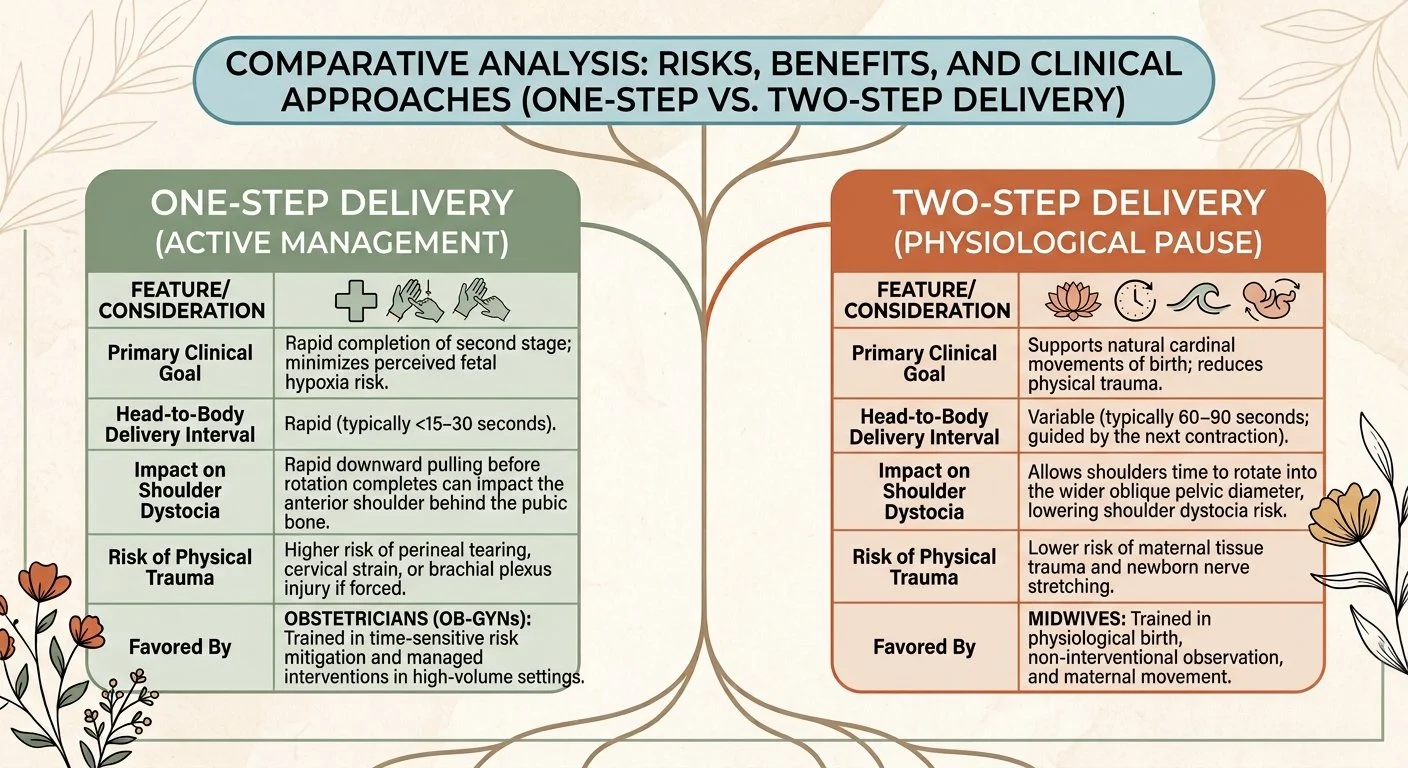
Active management of the shoulders where the birth attendant applies manual downward traction to the baby's head immediately after it emerges, guiding the shoulders out without waiting for the mother’s next uterine contraction.
2. Two-Step Delivery (Physiological/Expectant Management)
A physiological approach where, following the birth of the head, the birth attendant pauses, refrains from applying traction, and allows the fetus to undergo natural restitution and external rotation (internal alignment of the shoulders within the maternal pelvis). The shoulders and body are then delivered with the next spontaneous uterine contraction.
Why OBs Favour One-Step Delivery
Obstetricians are trained heavily in managing emergencies like fetal distress or shoulder dystocia (when a baby's shoulder becomes lodged behind the pubic bone). In a hospital setting, OBs are often conditioned to consider a delayed body delivery as a risk for umbilical cord compression or fetal oxygen deprivation. As a result, routine manual traction is used to finish the delivery as swiftly as possible.
Why Midwives Favour Two-Step Delivery
Midwives operate under a physiological framework. Evidence indicates that when the fetus is stable, waiting for the next contraction gives the baby’s shoulders time to naturally un-rotate and realign (restitution). Research demonstrates that forcing the shoulders before this rotation occurs actually increases the likelihood of shoulder dystocia, whereas waiting allows the uterine muscle (myometrium) to do the work safely.
Fetal Reflexes and Primitive Birth Integration
The birthing process is not a passive passage; it is an active neuromuscular event for the newborn. Forced or hasty traction during a one-step delivery can disrupt important infant reflexes.
Key Fetal & Newborn Reflexes Active During Delivery
Galant Reflex (Trunk Incurvation): Stimulation along the side of the baby's spine causes the hip to flex toward the stimulus. As the baby passes through the birth canal, resistance against the vaginal wall triggers this reflex, helping the baby "wiggle" and assist their own descent.
Magnus / Asymmetric Tonic Neck Reflex (ATNR): When the baby’s head rotates during restitution (the pause in a two-step birth), the extension of the arm and leg on the side the head is facing helps push the baby through the pelvic outlet.
Moro & Tonic Labyrinthine Reflexes: Physiological contractions provide strong sensory input that helps integrate these primitive protective reflexes.
Implications of Reflex Retention
When a baby is rapidly pulled or extracted without allowing these reflex-driven movements to unfold naturally:
Neuromuscular Disruption: The infant misses out on vital proprioceptive cues that program primitive reflex integration.
Reflex Retention in Childhood: Unexpressed or interrupted primitive reflexes during birth (such as a retained Galant or ATNR reflex) have been linked in pediatric occupational therapy to later challenges with sensory integration, motor coordination, spatial awareness, and postural control.
Advocating for Two-Step Delivery in Toronto Hospitals
If you are giving birth with an OB or hospital care team at Toronto facilities like Mount Sinai Hospital, St. Joseph’s Health Centre, or Sunnybrook, you can safely advocate for a physiological two-step delivery if you and your baby are low-risk and stable.
How to Advocate Safely
Include it in Your Birth Preferences: Clearly state in your written birth plan: "If fetal heart tones are reassuring upon birth of the head, we request a physiological pause to allow external rotation and await the next contraction for shoulder delivery."
Discuss it Prenatally: Bring up two-step delivery during your 34–36 week OB or clinic appointment. Frame it around evidence: "I’ve read about the benefits of allowing natural restitution between contractions to prevent shoulder dystocia. Is this something your team supports when fetal monitoring is stable?"
Establish Verbal Signals: Request that your provider verbally announce when the head is born and hold off on applying downward traction unless medically necessary.
How an experience Birth Doula Supports Your Advocacy
Navigating clinical preferences in a hospital setting can feel overwhelming during active pushing. Leah Jackson, founder of Mindful Sprouts Family Services, acts as your anchor and informational bridge:
Prenatal Education & Scripting: Leah helps you refine your birth preferences and practice clear, collaborative language to use with nursing staff and OBs.
Real-Time Intrapartum Support: During pushing, Leah provides calm, non-verbal and verbal reminders to slow the pace, encouraging deep breathing and pelvic relaxation between contractions.
Seamless Team Collaboration: Leah’s deep understanding of clinical protocols allows her to advocate alongside you respectfully, ensuring your medical team feels supported while your birthing preferences are honoured.
Frequently Asked Questions (FAQ)
Is a two-step delivery safe if the umbilical cord is around the baby's neck (nuchal cord)?A loose nuchal cord is very common and rarely an emergency. Midwives and experienced birth attendants routinely slip a loose cord over the baby’s head or simply allow the baby to slide through it during the next contraction without rushing.
Can I have a two-step delivery if I have an epidural?While an epidural may reduce your natural urge to push, your uterus will still contract. Your care team and doula can monitor uterine waves and wait for the next contraction to guide pushing, rather than pulling the baby out immediately between contractions.
What if my doctor says they must pull?Unless electronic fetal monitoring indicates fetal distress (such as severe deceleration in heart rate), a pause of 60 to 90 seconds between the head and the shoulders is clinically safe and evidence-backed. You or your support person can ask: "Is the baby in immediate distress, or can we wait for the next contraction?"
What if we use Intermittent Auscultation (IA) or lose the heart rate signal at delivery?Losing the audio signal right as the head crowns is common as the baby moves lower in the pelvis. Continuous monitoring is not required for a two-step delivery if the overall clinical picture shows your baby is coping well.
Medical teams look for key physiological indicators to confirm fetal stability:
Clear Amniotic Fluid: Fluid free of thick meconium indicates your baby has not experienced acute distress.
Good Tone & Facial Movement: A baby receiving sufficient oxygen displays active facial grimacing or movement upon delivery of the head rather than limp muscle tone.
Reassuring Prior Heart Rate Tracing: Normal baseline readings right before pushing indicate strong oxygen reserves for a brief 60–90 second pause.
Absence of Maternal Complications: Normal maternal vitals and no signs of dark bleeding or cord prolapse support waiting for uterine drive.