Waterbirth 101: Everything You Need to Know About Giving Birth in Water
If you are exploring your home birth options in Ontario, you have likely heard about the incredible benefits of using water for labour and delivery. Often referred to as "the midwife's epidural," waterbirth is a deeply intuitive, physically supportive, and comforting way to bring your baby into the world.
But how does it actually work? Is it safe? And what do you really need to consider when planning a water birth in your own home?
Welcome to Waterbirth 101. This evidence-based guide bridges the gap between clinical safety and mindfulness, giving you everything you need to know to plan a peaceful home water birth.
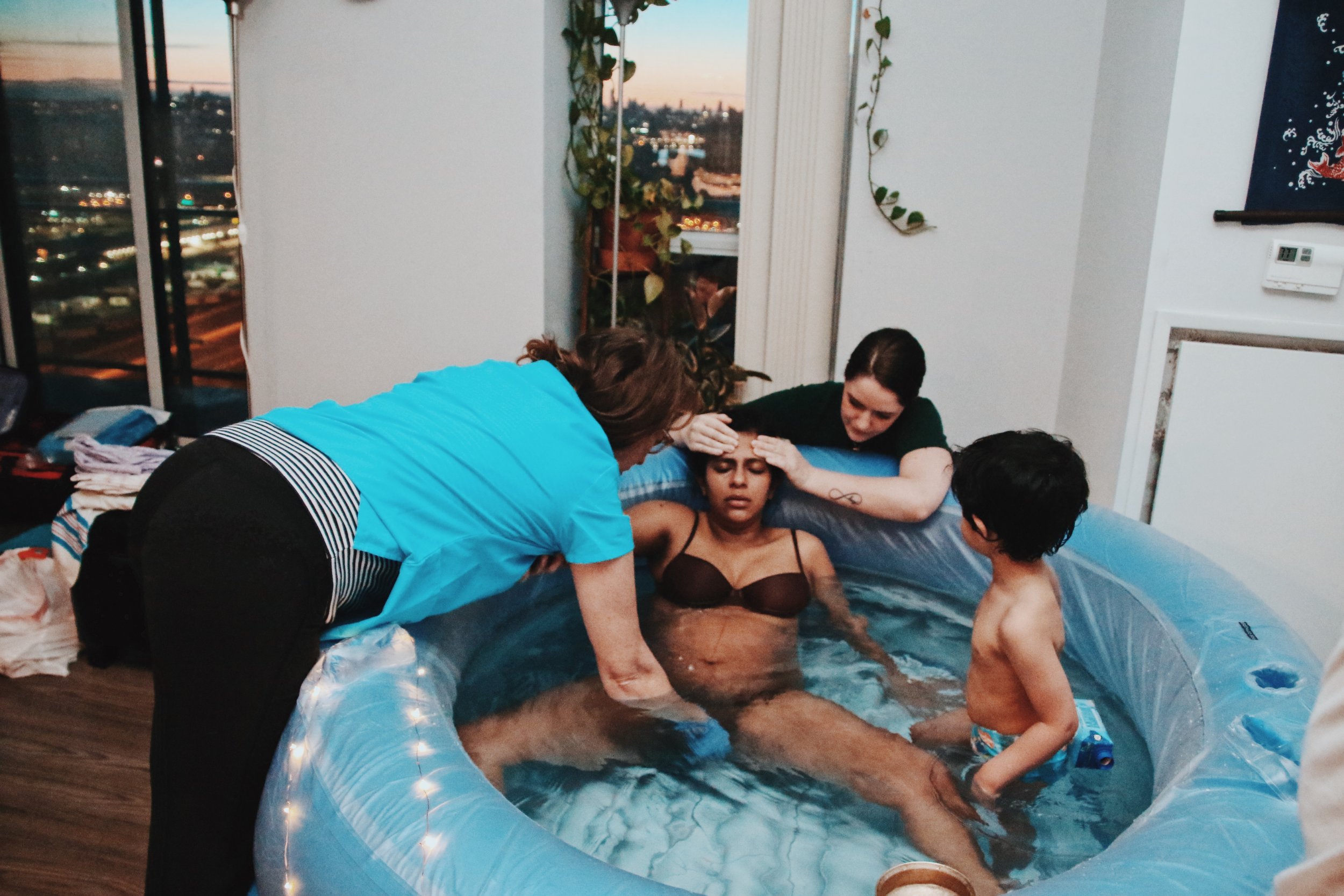
What is a Waterbirth? (The Basics)
It is helpful to understand the distinction between two different phases of using water during your birth experience:
Labouring in Water (Hydrotherapy): This means spending your active labour immersed in a deep tub of warm water to manage contractions, but stepping out of the pool before the baby is actually born.
Waterbirth: This occurs when you remain in the birth pool for the duration of pushing, and your baby is intentionally born completely underwater directly into your or your midwife's hands.
Both practices offer immense physical and emotional support, and you can decide which path feels right to you as your labour unfolds.
The Top Benefits of Waterbirth
There is a reason waterbirth has become a golden standard for physiological home births. Immersing your body in a warm pool triggers a powerful cascade of positive physiological changes:
1. Natural Pain Relief and Relaxation
Warm water lowers your body's adrenaline production and stimulates the release of oxytocin (the hormone responsible for labour progress) and endorphins (your body’s natural pain relievers). The sensory shift of the water helps soften the intensity of each surge.
2. Buoyancy and Easy Positioning
When you are suspended in water, you weigh a fraction of what you do on land. This buoyancy makes it effortless to shift between active birth positions—like kneeling, squatting, or resting on your hands and knees—without exhausting your muscles.
3. Perineal Protection
Warm water naturally softens and relaxes the tissues of the perineum. This gentle, steady warmth allows the tissue to stretch slowly and elastically as the baby crowns, significantly reducing the risk of severe of perineal tearing.
4. A Gentle Transition for Baby
Your baby has spent nine months floating in warm amniotic fluid. In a waterbirth, they are born into a fluid environment of the exact same temperature, providing a quiet, dark, and incredibly gentle transition to the outside world before they take their very first breath.
Safety First: How Does the Baby Breathe?
The most common question parents ask is: “What keeps the baby from inhaling water?”
Babies are born with a highly sophisticated, involuntary safety mechanism called the diving reflex. When a baby is born underwater, receptors in their face detect the warm fluid and immediately close off the glottis (the opening to the airway), preventing them from breathing or swallowing water.
Your baby continues to receive 100% of their oxygen through the umbilical cord from the placenta. Your midwife will calmly and smoothly bring the baby to the surface within a few seconds of birth or after the shoulders and body deliver. The contact with the cool air on their skin and face is what signals their lungs to expand and prompts their very first breath.
Is a Home Waterbirth Right for You?
While water birth is a beautiful option, it is best suited for individuals experiencing a healthy, low-risk pregnancy. Your Ontario midwifery team will routinely evaluate your eligibility, ensuring that:
Your pregnancy is considered low-risk and has reached full term (between 37 and 42 weeks).
You are carrying a single baby who is in a head-down (vertex) position.
Your vital signs and the baby's heart rate remain completely stable throughout labour.
Essential Elements to Prepare Your Space
To cultivate a true waterbirth sanctuary at home, you need to think about logistics well before your 37th week. While a full list of gear for your waterbirth kit is available, here are the core pillars of preparation.
The Right Tub: A purpose-built, heavy-duty inflatable pool (like the Birth-Pool-In-A-Box-Eco) features thick, reinforced walls designed for you to lean your entire body weight against. A home tub or other inflatable tub can be used so long as a depth of ideally 18 inches (minimum) can be achieved.
Hygiene and Cleanup: A brand-new, disposable pool liner ensures a completely sterile environment for your baby and makes postpartum cleanup entirely effortless. This is not necessary in an installed bath tub however with jacuzzis make sure the jets are not on if the waters have broken.
Temperature Control: A floating thermometer is mandatory. The water must be maintained around 37.5°C which is the perfect temperature for the actual delivery. A temp. between 36°C and 39°C (95°F to 99.5°F) throughout labour is perfectly fine. Reduce drafts unless mom feels hot, then a fan is helpful. Have handy a few cool cloths and a big jug of electrolyte water (with a straw!) to keep both mom and baby well and regulated.
The Sensory Atmosphere: Dim lighting, waterproof fairy lights, and personalized, laminated birth affirmations stuck to the room's walls help create a safe, unobserved space where your primitive brain can fully surrender to the birthing process.
Want to know more and or engage in support for a waterbirth experience?
Connect with us for a complimentary virtual consultation.
Local Waterbirth Resources in Toronto & Ontario: FAQ
-
Yes. Midwives in Ontario are thoroughly trained in waterbirth safety, monitoring, and complications. They carry specialized waterproof Dopplers, allowing them to monitor your baby’s heart rate regularly while you are comfortably resting right inside the pool.
-
While your midwives focus on your clinical safety, a doula focuses entirely on your physical comfort, your emotional grounding, and your partner's peace of mind. At Mindful Sprouts Family Services, we specialize in waterbirth preparation across Toronto (including Little Portugal, High Park, and the West End) and the Southern Georgian Bay region (including Stayner, Collingwood, and Clarksburg). We help you manage everything from birth pool setup logistics and water temperature monitoring to drafting a peaceful, mindfulness-centered birth plan.
-
Absolutely! Hundreds of babies are born in Toronto apartments, high-rise condos, and historic Ontario homes every year. The structural walls of professional birth pools are designed to distribute water weight safely. The main things your birth partner will need to manage are your hot water tank capacity and ensuring you have a universal faucet adapter to hook up a food-grade hose to your specific sink or shower plumbing fixture.
-
When a home waterbirth is attended by qualified professionals, large-scale studies show that outcomes are just as safe as giving birth on land. However, as with any birth choice, there are specific risks that your care team actively monitors and manages:
Water Inhalation (Extremely Rare): While a baby’s diving reflex naturally prevents them from breathing underwater, this reflex can be compromised if the baby experiences distress or an unexpected drop in oxygen levels before birth. Midwives mitigate this risk by continuously monitoring the baby's fetal heart rate through the water and ensuring the baby is brought to the surface immediately after birth.
Umbilical Cord Snap (Avulsion): Rare but possible, the umbilical cord can occasionally snap if the baby is pulled to the surface too quickly or forcefully. Midwives are trained to handle this smoothly by immediately clamping the cord to stop any bleeding. When you are lifting your baby out of the water, slow,gentle movements are always encouraged.
Maternal or Fetal Infection: If the birth pool equipment is not sterile, or if the water temperature is too high, bacteria can thrive. This risk is minimized by using a strict, single-use, disposable food-grade liner and keeping the water strictly under 38°C (100°F) to prevent maternal overheating and fetal tachycardia.
Delayed Response to Complications: If a sudden complication occurs—such as postpartum hemorrhage or shoulder dystocia—it takes a moment longer to get out of a birth pool than a bed. Professional birth pools (like the Birth-Pool-In-A-Box-Eco) feature wide, reinforced, sturdy walls precisely so you can climb out rapidly and safely if your midwife gives the command to transfer out of the water.